Monday, March 22, 2010

Obama's health care bill revision - USA TODAY


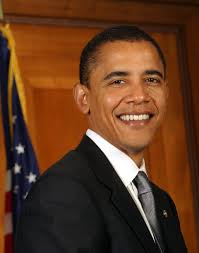
WASHINGTON — A $950 billion, 10-year health care proposal released by President Obama on Monday mirrors a bill passed by the Senate last year but revises some of its most contentious provisions, from taxes to Medicare.

In crafting a proposal it hopes will revive the stalled debate, the White House relied heavily on the $871 billion bill passed by the Senate in December despite calls from House Minority Leader John Boehner and other Republicans to "hit the reset button."

Like earlier bills, Obama's latest measure would require every American to have some form of health insurance and would provide subsidies to help low-income families afford it. Consumers who aren't insured through a large employer would be able to buy and compare policies through online marketplaces called "exchanges."

But the White House plan, which will be the focus of a bipartisan summit Thursday, also includes several changes Obama hopes will ease friction among Democrats that has slowed progress on the effort for weeks. Among the adjustments:

• "Cadillac" tax

A proposed 40% tax on high-priced or "Cadillac" health care plans would begin in 2018 instead of 2013, as originally proposed by the Senate. And the definition of a high-end policy would increase to $27,500 for a family, instead of $23,000.

The Senate's version of the tax, which was projected to raise $150 billion over 10 years, was opposed by labor unions. House Democrats, including Speaker Nancy Pelosi, had raised reservations about its impact. A typical family policy costs more than $13,000 in 2009, according to the Kaiser Family Foundation.

Andy Stern, president of the Service Employees International Union, indicated that there would be support from labor leaders for Obama's new proposal. "Working families deserve health insurance that covers more and costs less," he said.

• New taxes

For the first time, Medicare taxes would be charged on investment income — such as stock dividends and rent from investment properties — and not just wages. The new, 2.9% assessment would kick in only for individuals with incomes above $200,000 a year and couples earning more than $250,000.

"This would be a move away from the basic way we've financed Medicare to say, 'Let's make it more inclusive,' " said Roberton Williams with the non-partisan Tax Policy Center.

Obama's plan also would impose $10 billion more in fees on drugmakers, up from the $23 billion the industry had agreed to. In a statement, Pharmaceutical Research and Manufacturers of America said it is reviewing the proposal.

• Employer mandate

Companies with more than 50 employees that don't offer health insurance would pay $2,000 a year per employee — more than double the fine included in the Senate bill. That fine, as before, would take effect if any employees receive federal subsidies to help pay for premiums.

The White House proposal, which would phase in the higher penalty for companies that have between 50 and 80 employees, falls short of the more stringent House language that would have required large companies to offer health coverage to their workers. Randel Johnson, a vice president of the U.S. Chamber of Commerce, said the new requirement will still be onerous for companies.

"A lot of these small employers are just starting out and some of them can't afford to provide health insurance," Johnson said. "Some who can't still may not be able to pay this fine."

• Medicare cuts

The new proposal would make deeper cuts in the Medicare Advantage program, which lets seniors buy Medicare coverage from private insurance companies. The Senate bill proposed $118 billion in cuts to the program over 10 years.

About 10 million seniors — one-fifth of all Medicare patients — are enrolled in the program, which often provides services not covered under traditional Medicare, such as vision insurance. Obama has criticized the program because it costs taxpayers 14% more per patient than regular Medicare.

• Special deals

Agreements negotiated with senators to benefit their states are also out. Among those was a provision that would have required the federal government to pay 100% of the cost of new Medicaid patients in Nebraska.

The new proposal would require federal taxpayers to cover the full cost of new enrollees in all states between 2014 and 2017, 95% between 2018 and 2019 and 90% after that. Sen. Ben Nelson, D-Neb., who originally secured the benefit for his state, said extending it to others is "the right thing to do."

Read the full story at USA TODAY

Saturday, March 20, 2010

Exercising feet can help avoid injuries to back, other body parts

Our feet are the most used and abused part of our body. Our feet are our foundation; they are built for energy propulsion and shock absorption of the entire body. Yet we give them so little attention. As we all get back to our fitness programs, take care of your feet so you can achieve your goals.

What Is It?

Training the feet means strengthening and creating mobility of the toes, arch and ankle through exercises such as spreading the toes, flexing and pointing the foot, toe curls and picking up objects with your feet. Watch small children and notice how their toes are constantly moving. Without training, we lose mobility and strength in our feet. The foot loses its ability to function appropriately. Train your feet by using tools such as marbles, sticks and tennis balls to build strength and flexibility.

Training your feet and lower leg muscles is important when building strength for any standing exercise. Lack of proper foot and/or arch strength and flexibility can contribute to fallen arches, ankle, knee, hip and back problems, pain and injury.

Who Would Like It?

Everyone can benefit from exercising the feet and ankles, no matter your age.

Who Wouldn't Like It?

If you have a foot and/or ankle injury, consult a health care provider regarding the best exercises for you.

The Sweat Factor

Training your feet is not as easy as it sounds.

It isn't as hard as running a marathon, but depending on how de-conditioned your feet are, you will get quite a workout.

First, you need to be barefoot. Get your toes and ankles moving. The ability to spread the toes and feel comfortable with a toe separator (used in pedicures) between your toes may cause you to sweat. If your feet are sensitive, sit down when you do the exercises so you can monitor the pressure you use.

The Klutz Factor

Foot training exercises can make anyone feel like a klutz. One of my favourite exercises is to stand with equal weight on the ball of your foot and the heel; then lift your big toe without lifting the other four toes. Then reverse it and lift your four toes without lifting the big toes. Many of us won't be able to move our toes because our feet have lost function by being locked up in shoes. Using your feet to pick up sticks will challenge co-ordination and strength.

Gear Needed

Good tools for training your feet include small towels, flat bands (stretchy big elastics, used in yoga etc.), sticks and toe separators. Try putting a towel on the floor: scrunch it up using your toes, then pick it up and throw it in the laundry basket. Foot rollers, foot massagers, even tennis balls can give your feet relief. You can also purchase foot-care packages with exercise charts. One of my faves is the book, Fantastic Feet and Foot Fitness Kit by Aliesa George.

How Much Does It Cost?

Most foot fitness training products are inexpensive -- many items can be found at dollar stores. Get a bag of marbles, pedicure toe separators and wooden sticks for a dollar or less. The Fantastic Feet and Foot Fitness Kit costs US$30 plus shipping at centerworks.com.

Bottom Line

Taking care of your feet will pay off, and the care fits easily into your life, anywhere and anytime. Get moving.

Google Health lets users share their online records

Google Health has introduced a new feature that lets people share their online health records with designated doctors, friends, and family members.........
Click here for the story.

Tuesday, March 16, 2010

Heart Attack, Stroke and Cardiac Arrest Warning Signs

Heart Attack Warning Signs

Some heart attacks are sudden and intense — the "movie heart attack," where no one doubts what's happening. But most heart attacks start slowly, with mild pain or discomfort. Often people affected aren't sure what's wrong and wait too long before getting help. Here are signs that can mean a heart attack is happening:
  • Chest discomfort. Most heart attacks involve discomfort in the center of the chest that lasts more than a few minutes, or that goes away and comes back. It can feel like uncomfortable pressure, squeezing, fullness or pain.
  • Discomfort in other areas of the upper body. Symptoms can include pain or discomfort in one or both arms, the back, neck, jaw or stomach.
  • Shortness of breath with or without chest discomfort.
  • Other signs may include breaking out in a cold sweat, nausea or lightheadedness

As with men, women's most common heart attack symptom is chest pain or discomfort. But women are somewhat more likely than men to experience some of the other common symptoms, particularly shortness of breath, nausea/vomiting, and back or jaw pain.

Learn the signs, but remember this: Even if you're not sure it's a heart attack, have it checked out (tell a doctor about your symptoms). Minutes matter! Fast action can save lives — maybe your own. Don’t wait more than five minutes to call 9-1-1 or your emergency response number.

Calling 9-1-1 is almost always the fastest way to get lifesaving treatment. Emergency medical services (EMS) staff can begin treatment when they arrive — up to an hour sooner than if someone gets to the hospital by car. EMS staff are also trained to revive someone whose heart has stopped. Patients with chest pain who arrive by ambulance usually receive faster treatment at the hospital, too. It is best to call EMS for rapid transport to the emergency room.

Stroke Warning Signs
If you or someone with you has one or more of these signs, don't delay!

  • Sudden numbness or weakness of the face, arm or leg, especially on one side of the body
  • Sudden confusion, trouble speaking or understanding
  • Sudden trouble seeing in one or both eyes
  • Sudden trouble walking, dizziness, loss of balance or coordination
  • Sudden, severe headache with no known cause


Immediately call 9-1-1 or your emergency response number so an ambulance (ideally with advanced life support) can be sent for you. Also, check the time so you'll know when the first symptoms appeared. It's very important to take immediate action. If given within three hours of the start of symptoms, a clot-busting drug called tissue plasminogen activator (tPA) can reduce long-term disability for the most common type of stroke. tPA is the only FDA-approved medication for the treatment of stroke within three hours of stroke symptom onset.

A TIA, or transient ischemic attack, is a "warning stroke" or "mini-stroke" that produces stroke-like symptoms but no lasting damage. Recognizing and treating TIAs can reduce your risk of a major stroke. The usual TIA symptoms are the same as those of stroke, only temporary. The short duration of these symptoms and lack of permanent brain injury is the main difference between TIA and stroke.

Cardiac arrest strikes immediately and without warning.

Here are the signs:

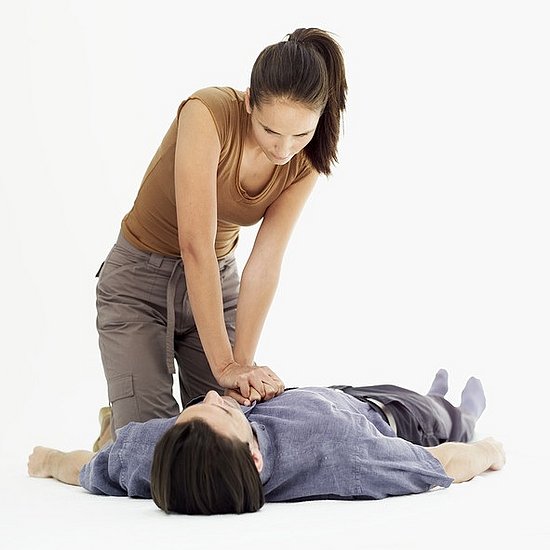
  • Sudden loss of responsiveness (no response to tapping on shoulders).
  • No normal breathing (the victim does not take a normal breath when you tilt the head up and check for at least five seconds).

If these signs of cardiac arrest are present, tell someone to call 9-1-1 or your emergency response number and get an AED (if one is available) and you begin CPR immediately.

If you are alone with an adult who has these signs of cardiac arrest, call 9-1-1 and get an AED (if one is available) before you begin CPR.

Use an AED as soon as it arrives.


Dial 9-1-1 Fast
Heart attack and stroke are life-and-death emergencies — every second counts. If you see or have any of the listed symptoms, immediately call 9-1-1 or your emergency response number. Not all these signs occur in every heart attack or stroke. Sometimes they go away and return. If some occur, get help fast! Today heart attack and stroke victims can benefit from new medications and treatments unavailable to patients in years past. For example, clot-busting drugs can stop some heart attacks and strokes in progress, reducing disability and saving lives. But to be effective, these drugs must be given relatively quickly after heart attack or stroke symptoms first appear. So again, don't delay — get help right away!

Statistics
Coronary heart disease is the No. 1 cause of death in the United States. Stroke is the No. 3 cause of death in the United States and a leading cause of serious disability. That's why it's so important to reduce your risk factors, know the warning signs, and know how to respond quickly and properly if warning signs occur.

Act in Time
The American Heart Association and the National Heart, Lung, and Blood Institute have launched a new "Act in Time" campaign to increase people's awareness of heart attack and the importance of calling 9-1-1 immediately at the onset of heart attack symptoms. Find the links here.

Source

Bananas may hold the key to curb HIV transmission

A new study has given some hope on controlling the transmission of HIV by use of Bananas. So effective is the chemical found in banana can surpass two current synthetic anti-HIV drugs T-20 and Maraviroc in terms of performance. The study conducted by University of Michigan Medical School was published in the Journal of Biological Chemistry.As per the study, Benlec, a lectin compound found in Bananas holds the key to prevent HIV transmission.Lectins can be defined as proteins that bind carbohydrates.

Lectin in the form of BenLec has the capability to bind to carbohydrates of the HIV-1 envelope thereby inhibiting viral entry and thus preventing sexual transmission of infection. "Lectins can bind to the sugars found on different spotsof the HIV-1 envelope, and presumably it will take multiple mutations for the virus to get around them.” lead author Michael.DSwanson said.

Using BenLec to develop an anti-HIV microbicide would mean a breakthrough in the efforts to contain the transmission of HIV. Not only would this microbicide keep the synthetic components at bay but would also prove cost effective. It is expected that 20% coverage with a microbicide that is only 60% effective against HIV may prevent up to 2.5 million HIV infections in three years.

Though Condoms are a safe method to prevent the spread of HIV, its usage has not gained popularity in developing nations. The use of condoms in these countries where the risk of infection is the highest is restricted due to cultural inhibitions. This is where BenLec based microbicide is expected to achieve results. "That’s particularly true in developing countries where women have little control over sexual encounters so development of a long-lasting, self-applied microbicide is very attractive”, revealed study Senior Author Dr. David Marvovitz.

Prior to this study, Co Authors Erwin Goldstein and Harry Winter had developed means to isolate BenLec from Bananas using biopurification method .Now to take these efforts forward Michael Swanson is developing a process to enhance BenLec’s potential clinical utility through molecular alteration. Swanson is a doctoral student in the graduate program in immunology at the Univ. ofMichigan Medical School.

Though there is still a very long way to go, a lead in the form of BenLec could hold the key to changing millions of lives across the world.
Source

MCI quantifies punishments for doctors accepting gifts

The Medical Council of India (MCI) has suggested some modifications to the regulations notified in December last that put a blanket ban on doctors for accepting gifts, travel facilities and hospitality from pharmaceutical companies in lieu of promoting their products.

While quantifying punishment for medical practitioners violating the provisions of the December 2009 Indian Medical Council (Professional Conduct, Etiquette and Ethics) Regulations, 2002, the MCI has suggested various degrees of punishments for doctors who accept gifts worth Rs.1,000 from any pharmaceutical or allied healthcare company instead of a total ban including one on research projects.

The punishments range from censure (for accepting gifts valued between Rs.1,000 and Rs.5,000) to removal from the Indian or State Medical Registry for more than one year (for accepting gifts worth more than Rs.1,00,000).

The recommendations, sent to the Union Health and Family Welfare Ministry for notification, also address other grey areas, including sponsorship of travel and lodging of medical practitioners participating in a conference, monetary grants and the question of clinical research funding.

According to the recommendations, a medical practitioner will not accept any travel facility within the country or outside, any kind of hospitality or cash or monetary gifts for self or family members for a vacation or even for attending conferences, seminars or continuing medical education programmes as a delegate. Punishment for violation of these clauses can range from censure to removal from Indian or State Medical Register for more than a year.

However, in the case of medical research projects funded by pharmaceutical and allied healthcare companies, the medical practitioner will have to take due permission from the competent authorities and ensure that such a research project has the clearance of national/State or institutional ethics committees and see to it that all prescribed legal requirements are fulfilled.

The source and amount of the funding has to be publicly disclosed at the beginning itself, proper facilities have to be provided to human volunteers if necessary for the project, and undue animal experimentations are not to be carried out. Importantly, the researcher will have the freedom to publish the results of the research in the greater interest of society and there shall be no compromise either with his or with the autonomy of the medical institution while conducting research.

Any kind of violation for the first time will invite censure but repeating the offence could invite the removal of the practitioner's name from the Medical Register. The period of removal would depend on the clause violated.

A medical practitioner is also not allowed to endorse any drug or product publicly and any study conducted on the efficacy or otherwise of these products will have to be presented to appropriate scientific bodies or published in an appropriate scientific journal.

“With these recommendations, we are looking at strict implementation of the regulations,” MCI president Ketan Desai said. There was some ambiguity on a few clauses in the regulations notified in December. “By clearly defining these we have resolved any confusion,” he said.

Measles vaccine turns toxic, four kids die

What will happen if the life saving drugs or the Immunisation vaccine will turn toxic. Can you imagine what will happen.......Yes its true, a shameful tragedy. Just read the story and Be Aware Of Your Health.

Source:

Bhopal: The immunisation programme in Madhya Pradesh turned fatal for four babies after they were administered measles vaccine and died.

A doctor and nurse working at the government vaccination camp in Damoh district where the tragedy took place have been arrested.

The children who died were aged below two years. More than a dozen other children had to be admitted to the hospital.

"Yesterday I brought my nine-month-old baby for the vaccination. He got high fever and then he died," said the mother of one of the dead child.

Initially health officials suspected the vaccine was past its expiry date but later it turned out it had been removed from sub zero storage conditions.

Sources said the vaccine was probably used more than three hours after the powder was mixed with the solvent, which made the mixture toxic.

The nurse in charge of the vaccines has been booked for criminal negligence and district vaccination officer Anupam Kulshareshta and two others have been suspended.

Three people have been suspended and arrested. Medical department inquiry is on in the matte. If somebody is found guilty then strong action would be taken against them. We have directed that this incident should never happene again," said Madhya Pradesh Chief Minister Shivraj Singh Chauhan.

The government has also stopped all immunisation programmes in Damoh district.

Real Time Web Analytics